

Highlights from SYTAR

lonnie and nancy at austin lake

Me and Nancy at The Oasis at Lake Travis, Texas.

I’m back from Austin, Texas, where my Calgary friend and colleague, Nancy Hong, and I attended the 2014 edition of Symposium on Yoga Therapy Research (SYTAR).

This year marked the 25th anniversary of the International Association of Yoga Therapists (IAYT) and was chock full of innovative and well-informed presentations on how yoga practices can be applied to the issues that keep us from experiencing our own inherent wholeness.

Highlights for me included:

  • Manning the LifeForce Yoga® (LFY) display with practitioners Tzivia Stein-Barrett, Ana Maria Sierra, accreditation board member Susan Tebb, and LFY founder
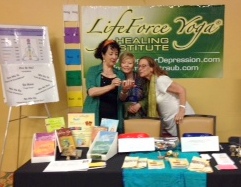
    ana lonnie tzivia

    Ana Maria, me, and Tzivia having some laughs at the LFY booth.

    and author of Yoga for Depression and Yoga Skills for Therapists, Amy Weintraub.  LFY is an integrated (postures, breath, hand seals, chant, imagery, intention used in conjunction) yoga practice for mood management, many components of which do not require a mat! We were blessed with being able to share its wonderful offerings with symposium attendees.

  • Co-representing LFY with Amy Weintraub at the Meeting of Schools. Accreditation of yoga therapy schools is a major initiative of the IAYT. Yoga as therapy is becoming increasingly recognized and as such, reliable competencies amongst therapists are utterly important. Hearing the concerns of the board and applicant schools, as well as hammering out scope of practice and policies for teacher credentials was particularly interesting.
  • reconnecting with a number of my formative teachers:
    • as mentioned above, Amy Weintraub. A whole new world opened to me with my Levels I and II training in LifeForce Yoga last year. Amy is a loving and gifted teacher and community builder who embodies her offerings and has developed a remarkable set of integrated practices for people who suffer from mood disorders. I am one of only three practitioners in Canada who are Level II certified.
    • Robin Rothenberg, Viniyogi, and founder of Essential Yoga Therapy. Robin is well known for her ground-breaking NIH study on using yoga to address lower back pain. She taught me Foundations of Yoga Therapy while I attended Mount Royal University’s Yoga Therapy Program
    • Nischala Joy Devi, former swami at the Satchidananda Ashram, one of the founders of IAYT, the first person to write about “Yoga as Therapy” in the Yoga Journal, and perhaps best known as the developer of the yoga portions of Dr. Dean Ornish’s Program to Reverse Heart Disease and the Commonweal Cancer Program. I have spent a great deal of time training with Nischala over the years and I have used my copy of her first book, The Healing Power of Yoga, so much that I need to have it rebound.
    • Neil Pearson, from whom I learned about using yoga to ameliorate chronic pain over five days last November. I am in the process of completing the case study which caps off the requirements for a Pain Care Certificate.
  • Spending more time with some of the stars of the yoga therapy world, amongst whom were
    • Richard Miller, founder of Integrative Restoration (iRest) and co-founder of IAYT
    • Retired cardiologist and yoga therapist, Dilip Sarkar, and his daughter, attorney Shaoli.
    • Larry Payne, author of Yoga for Dummies and instrumental teacher in the Loyala Marymount Yoga Therapy Training Program
    • Founder of Phoenix Rising Yoga Therapy, Michael Lee
  • Practicing applications:
    • Immersing myself in a day of yoga as it is offered by the Dean Ornish Program
    • Hearing some innovative ways that yoga is being used in mental health settings
    • Learning about the science behind the vagal brake and applying it in an experiential yoga practice
    • Using sun salutations to assess and address common bio-mechanical issues
    • Practicing pranayama with esteemed Ayurvedic doctor, Vasant Lad
    • Experiencing morning yoga with Jnani Chapman, Yoga For People in Cancer Treatment (YCat)
  • Purchasing some new yoga tools:
    • a set of twelve Hasta Pada Yoga Straps®. See here for some ways the Hasta Pada can be used.
    • six Three-Minute Eggs®. See here for a brief glimpse on how one yoga teacher is using these props therapeutically.
    • Joseph and Lillian LePage’s (of Integrative Yoga Therapy) book on Mudras.

and so much more!  I will be refining this post in the coming days, so check back!
Permanent link to this article: https://yoginsight.com/highlights-from-sytar/

Sign Up for July Drop-In Yoga


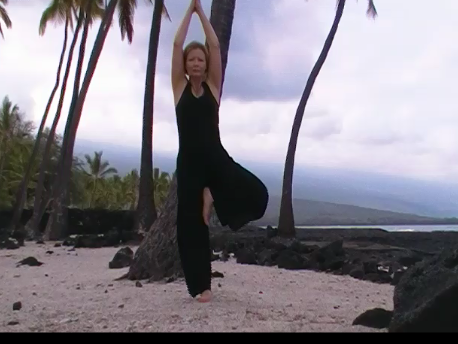
Tree at Ho'nau'nau

Tree at Ho’nau’nau

Over the month of July, drop-in classes will be offered by donation (suggested $12 – $15 per class).  Space is limited, so if you sign up and then decide not to come, please revisit the list and take your name off.

Tuesday Morning (10 – 11:30) at Shaganappi

Tuesday Evening (7 – 8:30) at McDougall United

Wednesday Evening (7 – 8:30) at Shaganappi

Click below to sign up for one, two, or a lot of classes!

Sign Up Now!

Permanent link to this article: https://yoginsight.com/sign-up-for-july-drop-in-yoga/

Some Thoughts on Beginner’s Mind


Beginner’s Mind.  As a foundational attitude in meditation, recovery, healing, physical therapy, addictions rehab, and even working as a helping professional, beginner’s mind is indispensable.

beginner's mindThis term, popularized by Zen teacher, Shunryu Suzuki, is so rich in meaning for our lives.  I think I first heard the term from Jon Kabat-Zinn in his famous Full Catastrophe Living, the ground-breaking exposition of his Mindfulness-Based Stress Reduction Program developed and used at the University of Massachusetts Medical Centre.  Jesus spoke about it at least three of the Gospels, “And he said: ‘Truly I tell you, unless you change and become like little children, you will never enter the kingdom of heaven.’”(Matt 18:3)   A popular saying goes something like this, “Everything I ever needed to know I learned in kindergarten.”  It is laughable that the validity of this last sentence depends upon what happened for you in kindergarten!

We all sense interiorly the truth of these statements, yet we impulsively build ourselves up to be experts or, conversely, avoid participating in anything that might show us up to be less skillful or intelligent than others.  I think there is more to Jesus’ statement than simply meaning we should be humble and servile.  To truly love ourselves and others we need to be able to let down our defenses.  I suspect that there is false refuge, an ultimately unreliable feeling of safety and protection, in being experienced, expert, hard-working, adept, or knowledgeable.  At least one of the problems with these is that we can never be the greatest at everything.  And if we don’t feel safe, we tend to avoid.  Avoidance really limits our lives, causes us to suffer. One could argue that the grasping onto safety, which ultimately is fabricated, also truly limits our ability to live wholeheartedly. (I am influenced and impressed by the work of Dr. Brené Brown in this area.)

I have resisted writing this article because I have myriad thoughts, several influences and a thousand applications for beginner’s mind.  I am strongly compelled to make this piece of writing the final word on the subject as it applies to everything.   This tendency is the antithesis of beginner’s mind, ironically!  Suffice it to say that this little blog will be less than perfect and that I have come to terms with that.  I need to practice what I preach.

There is a deep feeling of relief that comes with really adopting beginner’s mind.  I don’t really need to know everything, anything for that matter.  I can be a blank slate, a sponge, a student in every new moment.  There is nothing to prove.  There simply is an open willingness to see what unfolds and experience it with as much loving objectivity as is possible in a human body.

I try to cultivate beginner’s mind when I meditate.  Sitting quietly for long periods many times a day is much less tedious when I adopt the attitude.  This practice spills over into the rest of my life.

One of the biggest obstacles to healing from a physical injury seems to be the inability of the injured person to find a middle ground in activity level and intensity.  The athlete will have difficulty giving up the training and competition as it existed before the damage, and may be tempted to do absolutely nothing.  The frail person may want to carry on with duties as though healthy and strong or give up and become a complete invalid. A person with pain but no discernible tissue damage may ramp up their pain by pushing through it, or, ironically, by being afraid of and avoiding it (this is called “pain avoidance” by Neil Pearson, expert on using yoga with persistent pain – see Links in left side bar).  Beginner’s mind is very helpful when faced with these types of situations.  It is like the body and mind need to start afresh, like beginners.  There may be a little bit of grieving that goes with giving up what one considers one’s identity.  But choosing to adopt beginner’s mind as a practice can lessen the need to grieve because it is taken up intentionally.  Cultivating the mindset can even be a goal in and of itself, outside of any recovery objective.

When I use beginner’s mind as a spiritual director or healing energy practitioner, I let go of the obstacles that prevent me from truly listening to those with whom I work.  I can be there, with an open acceptance of whatever presents itself and choose a response from an undefended place.

When I use beginner’s mind in my physical yoga practice I gradually learn for myself what the yoga master understands but is only imperfectly able to convey, by way of verbal and visual cues, to the novice.  When I approach my practice with this attitude I take responsibility for my own experience and see the subtle unfolding of what might otherwise be a very quick, reflex reaction.  For example, I notice discomfort or comfort for what they are:  physical sensation very quickly followed by labelling (stretch, contraction, pinch, pressure), then assessment (good or bad or unsure), and then emotional response (fear, happiness, pride, shame).  A physical reaction often happens, too (recoil, relax, stiffen up, go to the bathroom). And I might feed the whole chain of this unfolding with thoughts (“I bet this tightness is from when I got so stress at work; jeez, I really need a vacation!” or “I love hot yoga.  I wish I could do this all day.”).

Most of us would prefer to have pleasant experiences.  What we don’t realize if we are not adopting beginner’s minds is that we have a fair amount of control over how we experience our lives.  When I notice each of the stages of experience as they unfold, I become empowered to decide whether to label, assess, attach an emotion, act, or tell myself stories about the situation.  I can stop the cycle at any of these steps and just notice the pureness of the moment.  I can choose a different response, calmly, even though the experience might be difficult or uncomfortable.

Further pragmatic support for cultivating a beginner’s mind is that it helps the nervous system to improve.  Dr. Rick Hansen (see Links in the left side-bar), neuropsychologist and author of many books including Buddha’s Brain, says that adopting beginner’s mind increases the nervous system’s ability to learn because novelty has that effect in the brain.  Old, embedded pattern, or new possibility?  That is a choice you make when you decide whether or not to adopt beginner’s mind.

Definitely one needs to be able to trust in order to practice beginner’s mind. A safe and welcoming container is important when you first start.  Over time you more easily drop the defenses and aren’t as worried about what might happen.

If anything I’ve written here makes sense, perhaps you might be able to join me this spring in yoga class as we work with cultivating beginner’s mind.  Experts and beginner’s alike can “beceome as a little child.”

Permanent link to this article: https://yoginsight.com/some-thoughts-on-beginners-mind/