Sinus Problems – Spring is Kapha Season!


Even in dry, semi-arid, montane Calgary, spring is kapha season.  In ayurveda, sister science to yoga, kapha is characterized by cold and damp.  And it is this dosha, kapha, that is associated with sinus issues gaining a foothold.  This will be especially true for individuals who have a kapha prakriti, or constitution.
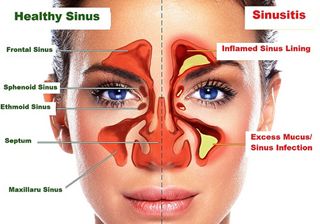
sinusesLifestyle adjustments can do much to alleviate excess kapha, and prevent or alleviate sinus pressure:

  • Minimize foods that are very hot or icy cold, either in temperature or taste; some examples are chili peppers or ice-cold foods and drinks.  Choose cooked, warm meals that are light, nurturing, and easy to digest.  Kitchari is a delicious, suitable dish. Or, saute’  the following spices in clarified butter and sprinkle on vegetables, grains, or incorporate into soups and stews.
    • turmeric
    • cumin
    • coriander
    • fennel
    • ginger
    • black pepper

These spices also can be roasted whole in a pan on the stove top or oven and then ground in to a powder, put in a small jar, and sprinkle on your food if you eat your noon meal out.

  • Consume lots of water flavored with spices in order to cleanse the sinuses of
    toxins.  Here is a suggestion I love from Maharishi Ayurveda: “Boil two quarts of water, pour the water into a thermos, and add two leaves of basil, two thin slices of ginger, four leaves of mint, two pieces of clove, and 1/4 teaspoon of marshmallow root. Keep drinking this water throughout the day, but make it fresh each morning.”
  • Get your poop regular.  This will help detoxify the body and reestablish a balanced environment in your sinuses.
    • Eat lots of organic, fresh fruits and vegetables.
    • Maharishi Ayurveda advises that you avoid eating eggplant, banana, tomato and bell pepper, because they “clog the channels”.
    • Other things to avoid include:Sugar and sweet baked goods

      Excess dairy products

      Soy, wheat, corn (only if allergic)

      Excess sour, pungent, and sweet tastes

      Leftover foods

      Nightshade vegetables, ie., potatoes, eggplant, peppers

      Excessive intake of ghee

    • Don’t overeat, but also do not skip or delay meals (ayurveda is big on regular meal times), because it upsets digestive balance and cause more toxins to be created.  Eating breakfast before 8 AM, lunch between 11 and 1, and dinner before 7 pm generally is advised.
  • Use a neti pot with a little sea salt and perhaps a little colloidal silver or herbal tincture specifically formulated for use in neti pots.  And consider using a nasya oil.
  • Yoga asana practice that is mildly energetic (sun salutations as opposed to restorative poses) will help to dispel kapha; it gets the lymph moving along.  Inversions can be helpful although you likely will want to use them to PREVENT a significant infection from settling in.

Gentler poses include:

Neck and shoulder “stretches”

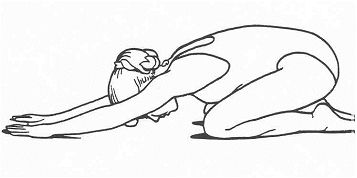
Child’s pose
Standing forward bend

downward-facing dog

rabbit pose

More challenging poses you could use if you are experienced in practicing them or you have a teacher or therapist who could work with you include:

shoulderstand (my favourite for sinus headache),

plow (perhaps using a headwrap)

headstand


  • Whether you do a formal yoga practice or not, I agree with Iyengar teacher, Marla Apt, who says, “it’s crucial to keep the shoulder blades moving away from your head and forward toward your chest. When the shoulder blades fall into place, you will feel a sense of spaciousness and relaxation in the neck and shoulder region, which will encourage the sinuses to open. Then you can focus on draining the sinuses with inverted poses. While the upper back and shoulder blades work, the head, neck, throat, and eyes should remain relaxed. Look for a feeling of calm and softness.”  For a sequence from Marla Apt, click here.
  • Keeping physically active, even vigorously so for some people, is some of the best medicine, although this may seem counterintuitive when the sinus headache is raging.  Try a brisk walk and you likely will notice that you are feeling much better.


  • Some breathing practices work wonderfully well in alleviating the congestion, despite what you might think at first.  If you are familiar with them, try three-part breath, alternate nostril breathing, or bellows breath.  Again, a teacher or yoga therapist can help you to learn how to perform these properly.
  • Nada yoga, the yoga of sound:  chanting “Om” or better, “Ng”.  Try chanting the soothing seed sounds individually on exhalation, and then in succession on inhalation:  oh, oo, ah, aye, ee, om, ng (with tongue to roof of mouth). The standard lum, vum, rum, yum, hum, om, and hing are nice to practice as well.  Brahmari pranayama (bee breath) is a practice that combines breathing and sound and you may find it helpful.
  • Use either active or passive healing imagery.  This is something I easily can guide you through and you can learn to do for yourself.
  • Use Bhramara Mudra, with or without guided meditation.  You can google this, but performing it properly and understanding its full import are best learned from a teacher.

I hope that you have found some usefulness in this post.  Please don’t hesitate to contact me with questions or for guidance.
Permanent link to this article: https://yoginsight.com/sinus-problems-spring-is-kapha-season/

Fresh Coriander (Cilantro) Chutney

This lovely chutney (from Yoga Journal, Scott Blossom) adds some sweet, sour, salty variety to the nourishing and cleansing kitchari I have posted elsewhere on this site.

cilantrolemongingerIngredients

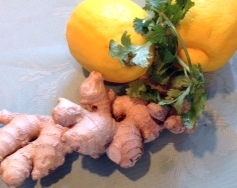
1 bunch fresh coriander (cilantro or Chinese parsley)

¼ C fresh lemon juice

¼ C purified water

¼ C unsweetened dry coconut

2 T fresh ginger root, chopped

1 tsp raw honey

1 tsp sea salt

¼ tsp fresh ground black pepper

Method

  1. Blend lemon juice, water, and fresh coriander until the coriander is coarsely chopped. Add the rest of the ingredients and blend until it is the consistency of pesto.
  2. Store covered in the refrigerator for up to one week.

Permanent link to this article: https://yoginsight.com/fresh-coriander-cilantro-chutney/

Perfectionism as an Incidental Guru

Another page turns, and 2015 is upon us. Before I say any more, please accept my heartfelt wishes that you have a peaceful, prosperous, healthy and happy new year!butterfly

Prompted to obtain a theme word for 2015, what came to mind for me was, “embody.” Embody experience, really practice what I preach, set the example wholeheartedly, integrate what’s in my head into the physical world, and live life fully!

So why is it that I have delayed this newsletter so many times, wanting to have certain things confirmed, others in place, and the timing just right?

The fog lifts and then I see the pattern. I must nod to the underlying perfectionistic tendencies with which I have worked diligently over the majority of my lifetime. There are so many layers of emotional aversion and attachment that underlie my need to have things just right. Minutes, hours, days can pass and many states of mind endured before I see that I have been held captive by a demon residing within me, my shadow side.

(In what follows I will use words like battle, crusade, struggle, striving, fall prey, entrenched. These all hint of a warrior’s life and yes, I think the analogy fits. But there is also a theme of greeting and being with. I challenge you to recognize these and see how they sit for you.)

The crusade against falling mindlessly into meticulousness has called upon and developed, at least to some extent, qualities of dedication, awareness, inquiry, discrimination, insight, intention, self-kindness, patience, humility, and surrender, to name a few.

My relationship with yoga has paralleled my struggle with perfectionism. Yoga was attractive because it was mysterious and seemed like a relatively easy way to be active. I knew I was supposed to be active but I really believed I had no affinity for physical pursuits and didn’t think an active lifestyle was as important as my more-heady, studious activities. Likewise, I knew I wasn’t supposed to be a perfectionist but the upside of being almost obsessive-compulsive hugely outweighed the negatives. Striving toward perfection infused me with passion, like my life depended on it. Often the tangible results were beautiful, praise-worthy, and elicited much adoration and respect.

But that little bit of mystery and an accessible format l appealed to me enough, and by chance I found hatha yoga, specifically an Iyengar-based style, and I was hooked. I think the precision of the alignment in Iyengar yoga that served to outweigh any concerns I had about being unathletic or that I was wasting time in non-academic activity. It was a perfectionist’s doorway in to a path that would eventually lead me gently away from the need for scrupulousness.

But this might not have been the case. It’s easy in yoga, particularly the physical practices such as poses, breath work, cleansing techniques and diet, to fall prey to perfectionism.

Iyengar yoga was my medicine for over ten years. It was so beneficial in so many ways and I am grateful for it. But at some point I was guided in a different direction. And I am glad. Had I had stuck with Iyengar yoga through the various levels of certification I believe now that I would be even more entrenched in my obsessive hell. Although I can’t quite put my finger on what has helped to balance my doctrinaire tendencies in the practice of yoga, when I look back, I can see a number of events and influences that came together.   I got injured doing things “the right” way. Loved ones struggled, suffered and in some cases, died. Yoga philosophy encouraged me to look at what I was doing with curious eyes, hinted at deep challenges faced by many over the centuries, and promised some relief with concepts riddled with paradox. And the contradictions and difficulties that came up in my hours and days of silent meditation were partly quelled by my study with scripture and learned teachers. Physical yoga practice, in spite of my disenchanted state, kept me grounded.

There is a popular saying that when the student is ready, the teacher appears. Of course, the teacher need not be a person, but in fact can be a life event, an opportunity, a larger situation. This has been my experience. The various tools of yoga have mingled with my life circumstances and an overriding desire to know my purpose on earth. Together they have led me to a place where I know that my life’s purpose is to live fully and wholeheartedly regardless of circumstance and my yoga fits me instead of me trying to fit the yoga.

Am I free of perfectionistic tendencies? By no means. These propensities are like the “thorn” in St. Paul’s side, the “incidental gurus” or touchstone elements that launch profound transformation.

Permanent link to this article: https://yoginsight.com/perfectionism-as-an-incidental-guru/